

Why Every Cummins ISX VGT Turbo Should Have a Turbo Blanket
Updated: Jun 3

The Cummins ISX VGT turbocharger is an impressive piece of engineering. By using a Variable Geometry Turbocharger (VGT), Cummins was able to improve engine performance, emissions, and drivability across a wide range of operating conditions.
Unfortunately, one component of the VGT system has developed a reputation for being both expensive and prone to failure: the electronic actuator.
Over the years, we've seen countless discussions about failed actuators, fault codes, and expensive turbocharger replacements. Through our involvement in the diesel performance industry, we had the opportunity to look deeper into why these failures occur and what could be done to improve reliability.
Understanding the VGT Actuator
Unlike a traditional turbocharger, a VGT turbo uses movable vanes inside the turbine housing. The electronic actuator controls these vanes, constantly adjusting turbocharger performance based on engine operating conditions.
The actuator contains sensitive electronic components and motors that must operate in one of the harshest environments found on a diesel engine.
Mounted directly on the turbocharger, the actuator is exposed to extreme temperatures generated by exhaust gases and the turbine housing.
The Heat Problem
During development of an improved VGT turbocharger, our team spent considerable time evaluating common failure points.
One issue that repeatedly surfaced was heat.
The electronic components inside the actuator are located very close to one of the hottest areas of the engine. While the actuator is designed to withstand elevated temperatures, repeated exposure to heat can take its toll over time.
As we evaluated possible solutions, it became clear that reducing the amount of heat reaching the actuator could potentially improve reliability and component life.
Our First Idea: A Dedicated Heat Shield
Initially, we explored the idea of creating a dedicated heat shield designed specifically to protect the actuator.
The concept seemed straightforward. If heat was contributing to actuator failures, a shield between the actuator and turbocharger should help reduce heat exposure.
However, once development began, we quickly encountered several challenges.
Clearance around the turbocharger is limited. Installation access was also a concern. Every version of the shield seemed to introduce new packaging and fitment challenges.
As the design became more complicated, we found ourselves asking an important question.
A Simpler Solution
As our team continued working through various heat shield designs, we kept running into the same problems. Clearance around the turbocharger was limited, installation could be difficult, and every new design seemed to create additional challenges.
During one of our development meetings, the discussion once again focused on redesigning the heat shield.
That's when I stopped the conversation and asked:
"Why don't we just put a turbo blanket on it?"
The room got quiet for a moment.
Then everyone agreed.
The more we discussed it, the more sense it made. Instead of trying to shield the actuator from heat after it had already escaped the turbocharger, we could contain the heat at its source.
The only problem was that no turbo blanket existed for the Cummins ISX VGT turbocharger.
So we decided to have one developed.
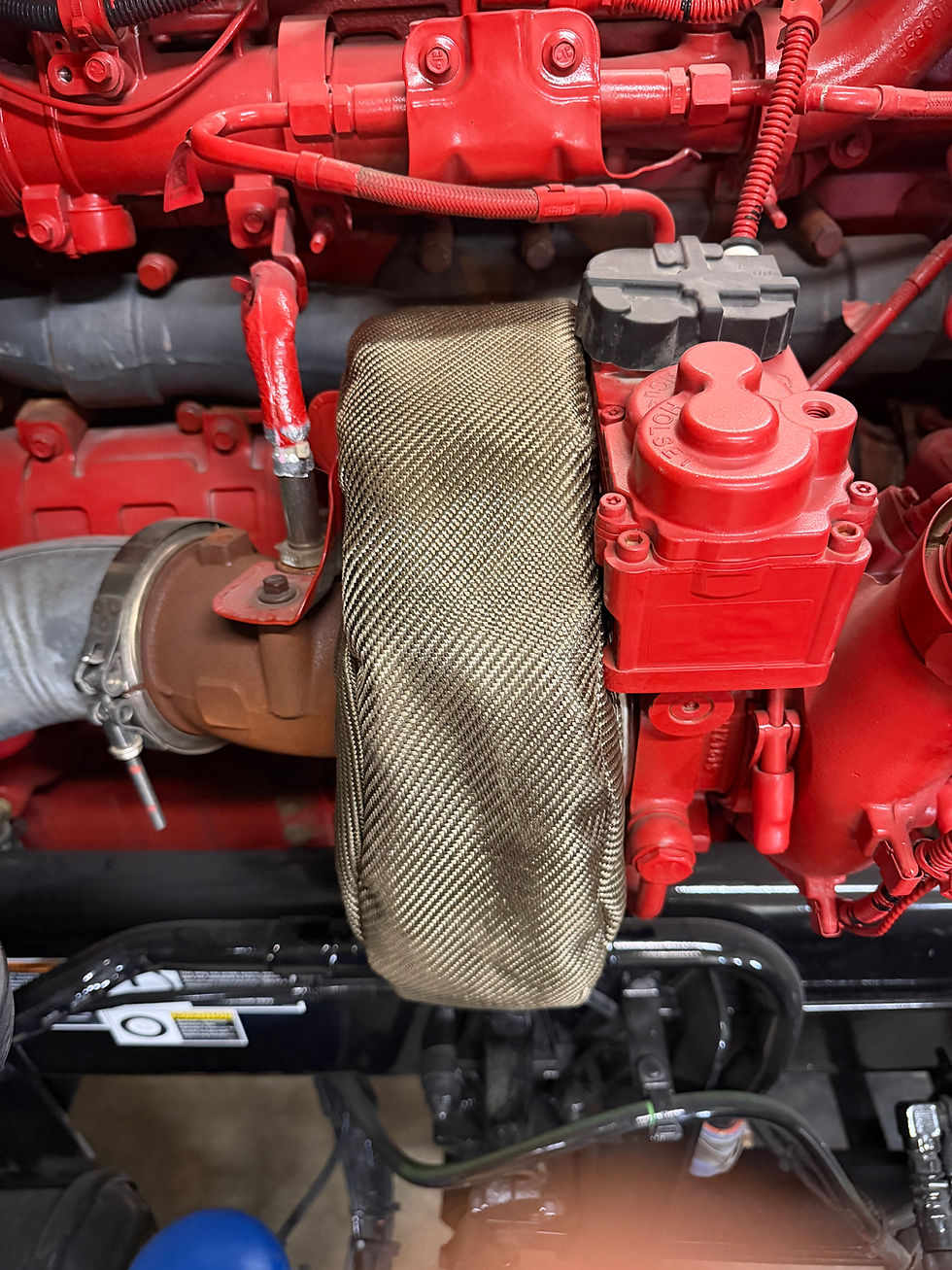
The result was a turbo blanket specifically designed to fit the Cummins ISX VGT turbo while helping reduce the radiant heat being transferred to the actuator and surrounding components.
What started as an attempt to design a complicated heat shield ultimately led to a much simpler and more effective solution.

How a Turbo Blanket Helps
A turbo blanket wraps around the turbine housing and acts as a thermal barrier.
Benefits include:
Reduced heat exposure to the VGT actuator
Reduced underhood temperatures
Protection of nearby wiring and components
Improved heat retention within the turbine housing
Potentially faster turbocharger response
Most importantly, reducing radiant heat helps address one of the environmental factors that can contribute to actuator stress and failure over time.

Why We Believe Every VGT Turbo Should Have One
The cost of a turbo blanket is small compared to the cost of replacing a failed actuator or turbocharger.
Whether your truck is stock, tuned, used for heavy hauling, or operated in extreme conditions, the actuator is still exposed to the same heat generated by the turbocharger.
Because the blanket addresses heat at its source, we believe every Cummins ISX equipped with a VGT turbocharger can benefit from additional thermal protection.
Final Thoughts
When we started evaluating VGT reliability, our goal was to find ways to improve durability and reduce common failure points.
The more we studied the issue, the more obvious the solution became.
Instead of building increasingly complex shields around the actuator, a turbo blanket offered a simple, effective, and proven way to reduce heat exposure.
Sometimes the best engineering solutions are also the simplest.
For anyone running a Cummins ISX VGT turbocharger, a quality turbo blanket is one of the easiest upgrades you can make to help protect your investment and improve long-term reliability.
for more info go to:

Comments