

Understanding Cummins ISX Liner Fretting, Liner Movement, and Head Gasket Failures

The Cummins ISX has earned a reputation as one of the most popular heavy-duty diesel engines on the road. When properly maintained, these engines are capable of delivering hundreds of thousands of miles of reliable service. However, many owners, fleets, and engine rebuilders have encountered recurring issues involving liner movement, liner fretting, and head gasket failures.
Understanding how these problems develop can help prevent costly repairs and improve engine longevity.
What Is Liner Fretting?
Cylinder liners are designed to fit securely within the engine block and provide a durable surface for the pistons to operate against. In order to function properly, the liners must remain stable and properly supported by the engine block.
Liner fretting occurs when small amounts of movement develop between the cylinder liner and the block. Although the movement may be microscopic, repeated vibration, engine loading, and thermal cycling can gradually wear the mating surfaces between the liner and block.
Over time, this wear can reduce the support available to the liner and contribute to additional movement, creating a cycle that can lead to more serious engine problems.

Why Is Liner Stability Important?
Cylinder liners must maintain proper height and support within the engine block. Even small changes in liner position can affect how the cylinder head gasket seals against the engine.
When liner support is compromised, engine builders may observe:
Head gasket failures
Coolant loss
Combustion gas leakage
Changes in liner protrusion
Increased wear in critical sealing areas
These issues can become especially costly during heavy-duty operation where engines are subjected to high cylinder pressures and continuous load.
Changes in the Cummins ISX Platform
As the Cummins ISX evolved over the years, design changes were made to improve efficiency, reduce weight, and meet changing emissions requirements.
Many engine builders and diesel technicians have noted that later single-cam ISX engines appear more susceptible to liner stability concerns than earlier versions. While multiple factors can contribute to liner movement and head gasket failures, maintaining cylinder block rigidity has become an area of focus during many engine rebuilds and performance applications.
This is particularly true for engines operating with high torque calibrations, performance tuning, or demanding duty cycles.
The Relationship Between Block Flex and Liner Movement
Every engine block experiences some degree of flex under load. High cylinder pressures, heavy pulling, and repeated heat cycles place significant stress on the engine structure.
As block movement increases, the ability of the block to maintain consistent support around the cylinder liners can be affected. Engine builders often refer to this as block flex.
Reducing block flex has long been a strategy used throughout the diesel industry to improve reliability and maintain stability within the engine structure.
Many engine manufacturers utilize reinforcement and stiffening strategies in various engine platforms to improve structural rigidity and durability.
How Engine Builders Address These Problems
When rebuilding a Cummins ISX, experienced engine builders often focus on several key areas:
Proper Counterbore Inspection
The liner seating surface must be inspected to ensure proper support and liner height.
Correct Liner Protrusion
Maintaining proper liner protrusion is critical for head gasket sealing and long-term reliability.
Stainless Steel Shims
Many rebuilders utilize stainless steel shims to help achieve proper liner height and provide additional support where needed.
Block Reinforcement
Additional reinforcement can help increase structural rigidity and reduce block movement under heavy loads.

How a Cylinder Block Stiffener Works
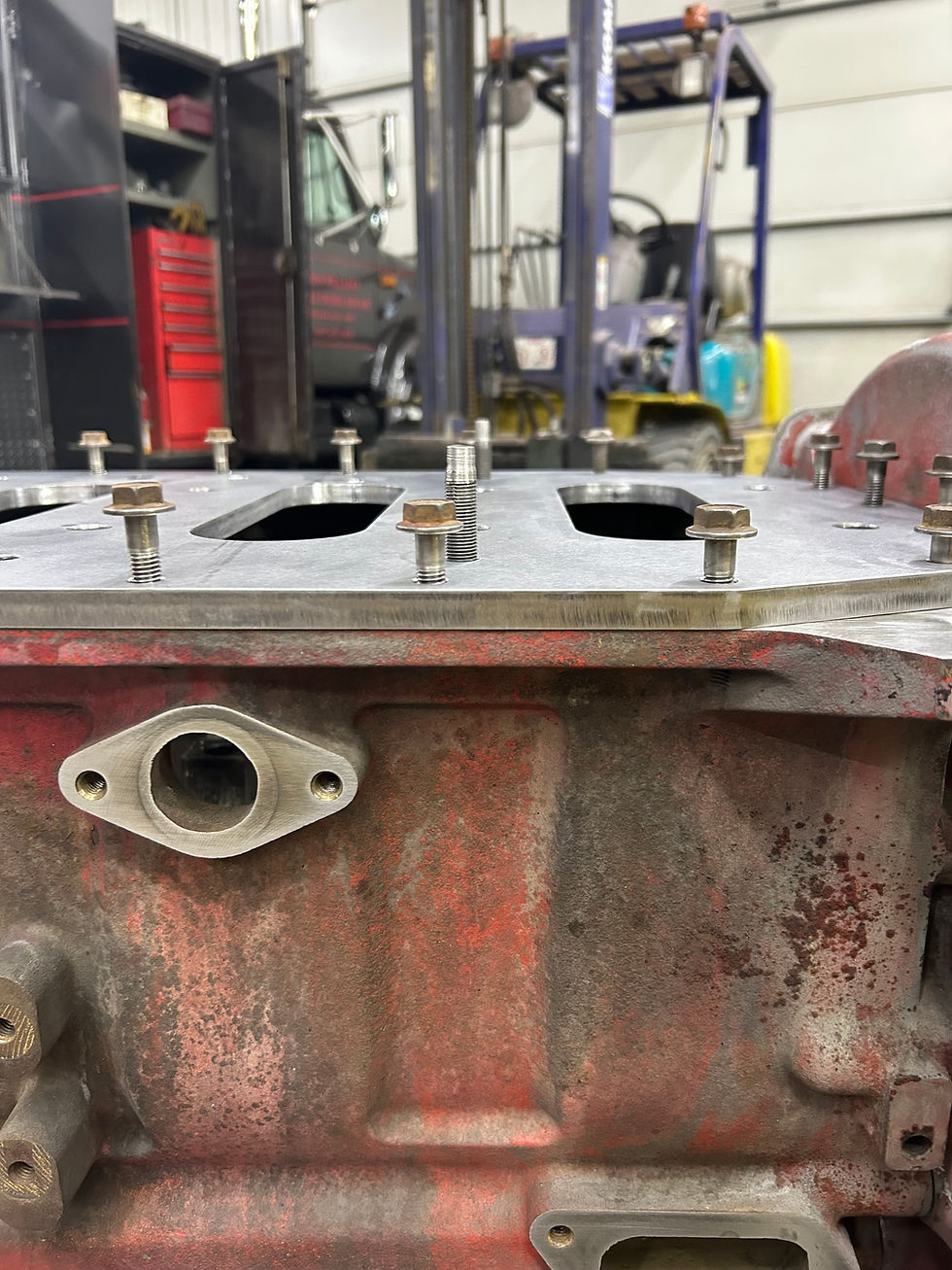
A cylinder block stiffener is designed to add support to the lower portion of the engine block around the oil pan rail area.
By increasing rigidity throughout the lower structure of the block, a stiffener helps reduce flex during engine operation. The goal is to improve liner stability and help maintain proper sealing conditions throughout the engine.
The Matrix Truck Parts Cummins ISX Cylinder Block Stiffener Plate is manufactured from heavy-duty ½-inch Grade 50 steel and provides support across all six cylinders. The design reinforces the lower block structure while allowing installation without removing the engine from the chassis.


Maximizing Reliability During an Overhaul
For engine owners investing in an in-frame overhaul or complete rebuild, addressing potential liner stability concerns while the engine is already apart can be a cost-effective approach.
Combining proper machining practices, accurate liner height measurements, stainless steel shims when required, and structural reinforcement can help improve long-term reliability and reduce the likelihood of future failures.
Final Thoughts
Liner fretting, liner movement, and head gasket failures are issues that can lead to expensive repairs and downtime in heavy-duty diesel engines. Understanding the factors that contribute to these problems allows owners and engine builders to make informed decisions during maintenance and overhaul procedures.
By focusing on proper liner support, maintaining correct protrusion, and improving block rigidity, engine builders can help maximize the reliability and longevity of the Cummins ISX platform.
Learn More About the Matrix Cummins ISX Cylinder Block Stiffener
Comments